URAL TRUCK HERITAGE
Born fromnecessity.Built forthe impossible.
From a wartime production site in Miass to a name associated with all-terrain heavy trucks, the URAL story is more than eight decades of engineering adaptation.
Explore the timeline ↓ARCHIVE / MIASS1941—TODAY
AN ENGINEERING LINEAGE
One factory.Generations of working trucks.
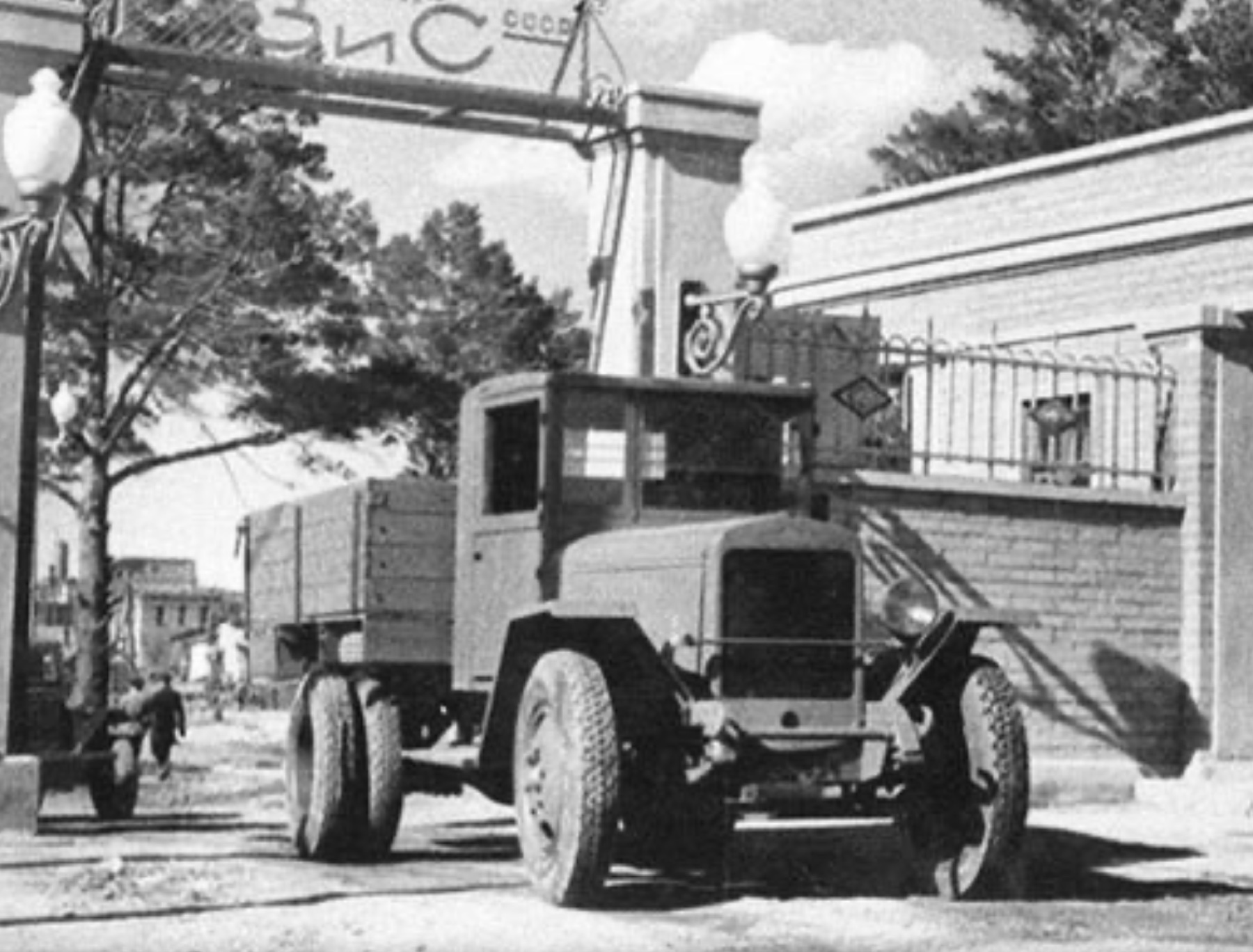
The URAL automobile plant traces its origin to 30 November 1941, when engine and foundry operations evacuated from Moscow’s Stalin Automobile Plant—ZIS—were assigned to Miass in the southern Urals.
The first years established a pattern that would define the brand: simplify what must be simplified, strengthen what matters, and configure the vehicle around the conditions in which it has to work. The result evolved from the three-ton ZIS-5V into specialised post-war vehicles, the URAL-375 all-terrain family, the diesel URAL-4320 and today’s broad range of chassis and complete trucks.
This independent English-language history is an editorial account prepared from the supplied archival material and the manufacturer’s published chronology. It provides context for buyers, fleet operators and enthusiasts; it is not an official manufacturer publication.
1941—1944
BIRTH IN MIASS
A factory bornfrom wartime urgency.
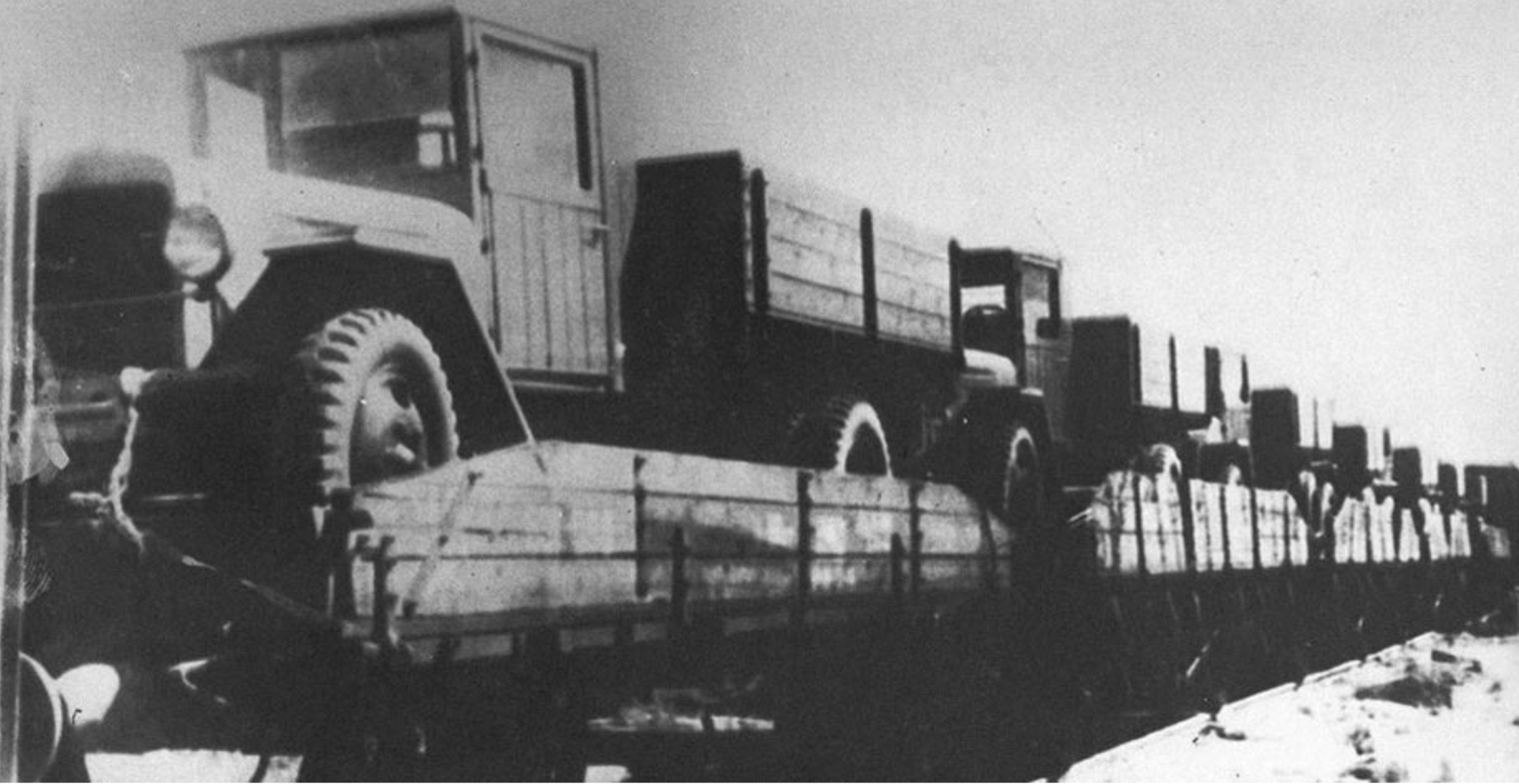
In October 1941, as Moscow prepared for evacuation, machinery, materials and workers from ZIS began moving east. Some operations first went to Ulyanovsk. On 30 November, the State Defence Committee directed the engine, foundry and related production units farther east to Miass.
The destination already had a head start: construction of military plant No. 316 had begun in 1939, and a railway branch reached the site. Through the severe winter of 1941–42, equipment was installed directly from arriving wagons, often outdoors. Material shortages meant that parts of the early factory were built in timber.
The first Miass motor workshop began operating in March 1942, followed by the first industrial batch in April. The original mission was to manufacture engines, transmissions, rear axles and castings. Demand for complete vehicles changed that plan. On 14 February 1943, full truck production was ordered to move from Ulyanovsk to Miass.
Within a year of the first vehicle, the workforce had delivered approximately 6,800 trucks for wartime and civilian requirements—while major parts of the production complex were still being completed.
1945—1961
POST-WAR ENGINEERING
From basic transport.To specialist vehicles.
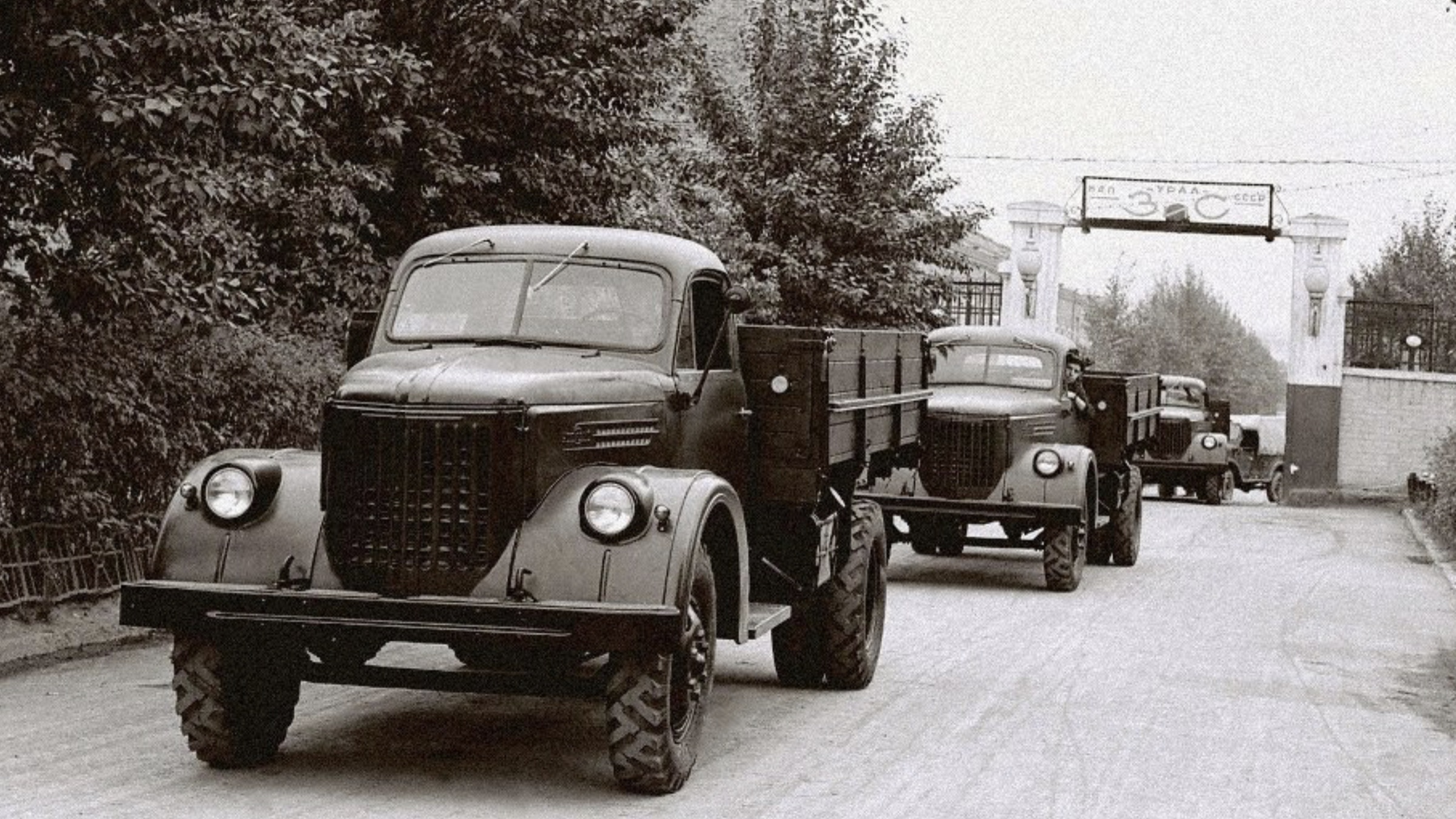
After the war, the Miass-built truck was continuously refined rather than treated as a frozen design. The ZIS-5M arrived in 1951 with a 77 hp engine, while experiments with wood-gas generators responded to petrol shortages and the availability of forestry waste in the Urals and Siberia.
The chassis also became a base for specialised equipment. UralZIS-351 dump trucks, municipal washing vehicles, refuse collectors, fire appliances, cranes and tankers demonstrated an idea still central to URAL vehicles: the chassis is a working platform, not merely a cargo truck.
Hydraulic brakes appeared in 1949; the rear axle, fuel-tank position and many smaller systems were revised in the years that followed. By the mid-1950s, engine output reached approximately 85 hp and top speed increased while low-speed flexibility was preserved.
Engineering programme and UralZIS-355M +
The factory’s design team, led in the early programme by A. S. Eisenberg, had pursued a more modern successor since the late 1940s. Experimental UralZIS-353 and 354 trucks tested revised cab proportions, more powerful engines and improved driver accommodation. Engineer Andrey Lipgart helped identify a practical route to an all-metal cab using duplicate press tooling. A 25,000 km interdepartmental trial in 1956 led to approval of the UralZIS-355M.
Series production followed in the late 1950s. Operators valued its heated all-metal cab, electric windscreen wipers and practical improvement over the older ZIS pattern. Export volumes were limited, though examples went to Finland and Afghanistan. The same period opened a motorsport chapter: in 1957, the factory team won its class and the individual title at an all-Union event in Rostov-on-Don. The last UralZIS-355M was completed on 16 October 1965, ending a basic design lineage that had evolved over more than three decades.
UralZIS-5MUralZIS-351UralZIS-355UralZIS-355MUralZIS-381UralZIS-358
1962—1976
THE ALL-TERRAIN IDENTITY
The URAL name.A global 6×6 reference.
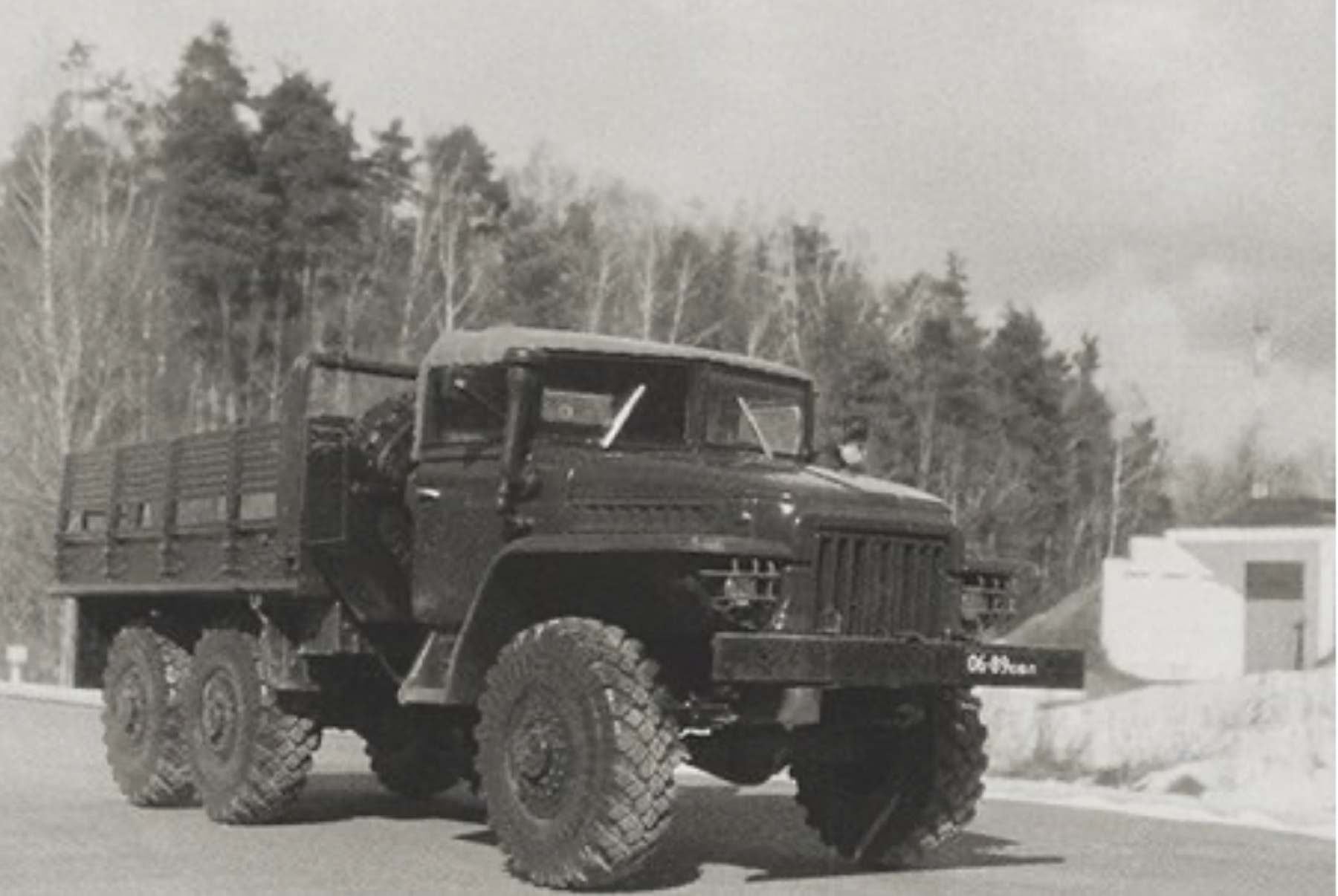
In 1962, UralZIS became UralAZ. The renaming coincided with a decisive product shift. Two-axle truck production ended in 1965 and the factory changed over to the fundamentally different URAL-375 without stopping the line or reducing output.
The URAL-375 gave the brand its enduring all-terrain identity. Export deliveries began in the mid-1960s, first to Mongolia and then to the German Democratic Republic. In 1969, a URAL-375D shown at the Leipzig International Fair received a gold medal and first-degree diploma.
Climate-specific variants demonstrated the platform’s reach: the URAL-375Yu was prepared for tropical operation, while the URAL-377K addressed Far North conditions. By 1976, the Miass plant had become the core of a wider production association that included forging, pressing, trailer and spare-parts operations.
“
The defining idea was no longer simply a truck produced in the Urals. It was a truck engineered to keep working across radically different terrain, temperatures and duties.
1977—1989
DIESEL EXPANSION
URAL-4320.The diesel benchmark.
Series production of the diesel-powered URAL-4320 began in 1977. It marked the dieselisation of the range and became the foundation for a broad family of cargo trucks, tractor units, specialist chassis and climate-adapted versions.
Development extended well beyond conventional wheeled trucks. The first experimental URAL-5920 tracked snow-and-swamp carriers appeared in late 1976, followed by an industrial batch in 1981 for oil-field work. Experimental forestry tractors and Far North variants were prepared for extreme cold, including operation around −60°C.
The URAL-5557 agricultural dump vehicle entered limited production in 1983. Its pressure-regulated wide-profile tyres, drivetrain ratios and body controls were designed around field work and a wide operating-temperature range. Chassis adaptability continued to support crew buses, cranes, tankers, fire appliances, repair workshops and oil-and-gas equipment.
1990—2014
RESILIENCE AND RENEWAL
Resilient through crisis.Renewed for hard work.
The 1990s brought the steepest production crisis in the factory’s history. Output fell from 31,371 vehicles in 1991 to 2,489 in 1998. Restructuring, rehabilitation and new product work eventually restored momentum.
Recovery was built around applications as much as base vehicles. Cab-over all-wheel-drive trucks, shift buses, railway workshops, oil-and-gas platforms, hydro-manipulator carriers, drilling chassis and road-going dump trucks expanded the commercial programme. In 2007 alone, shift-bus production reached 987 units; total production in 2008 was reported at 15,158 vehicles.
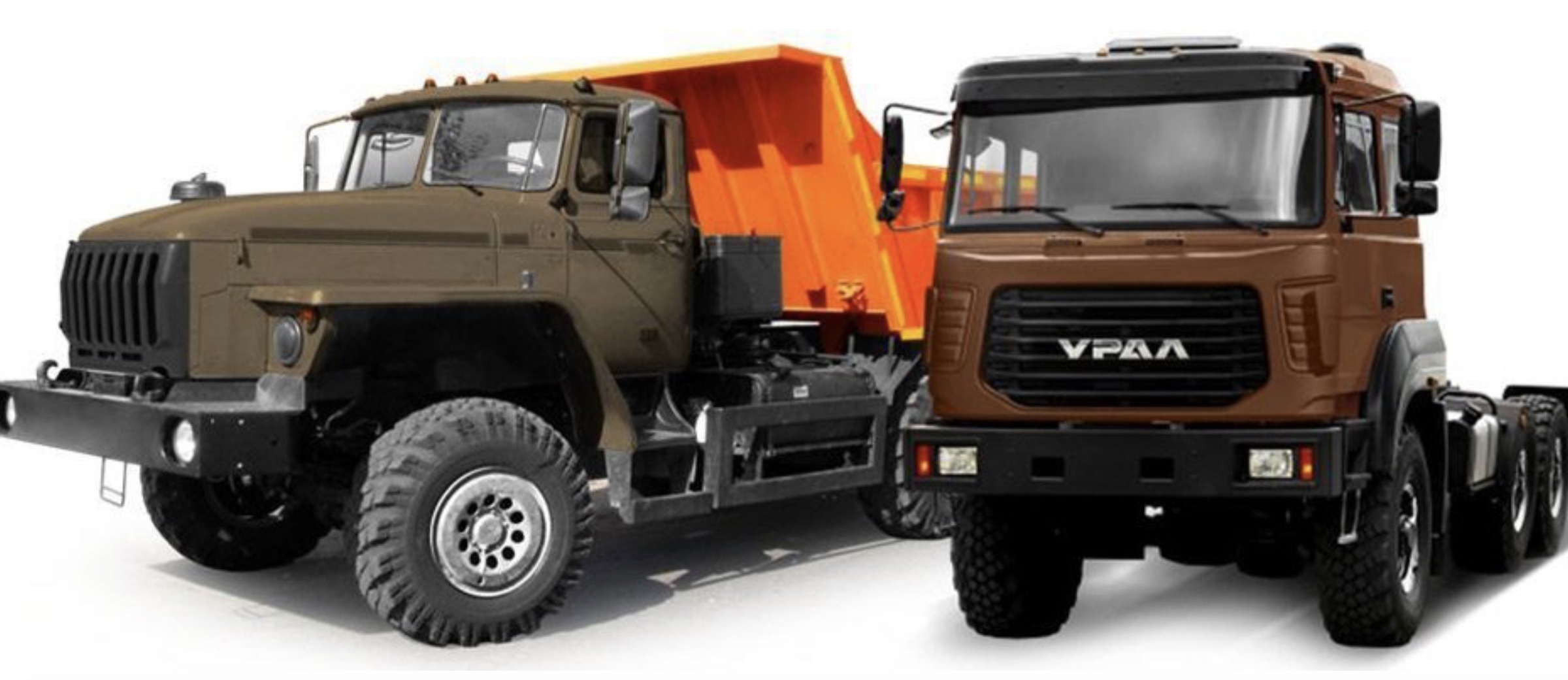
Manufacturing upgrades accompanied the product changes. The modernised URAL-M programme was developed from 2013 and entered series production in 2014, incorporating approximately 50 design and process changes across 4×4 and 6×6 bonneted and cab-over vehicles based on the established URAL-4320 architecture.
2015—2025
THE MODERN RANGE
New cabs. New segments.One platform logic.
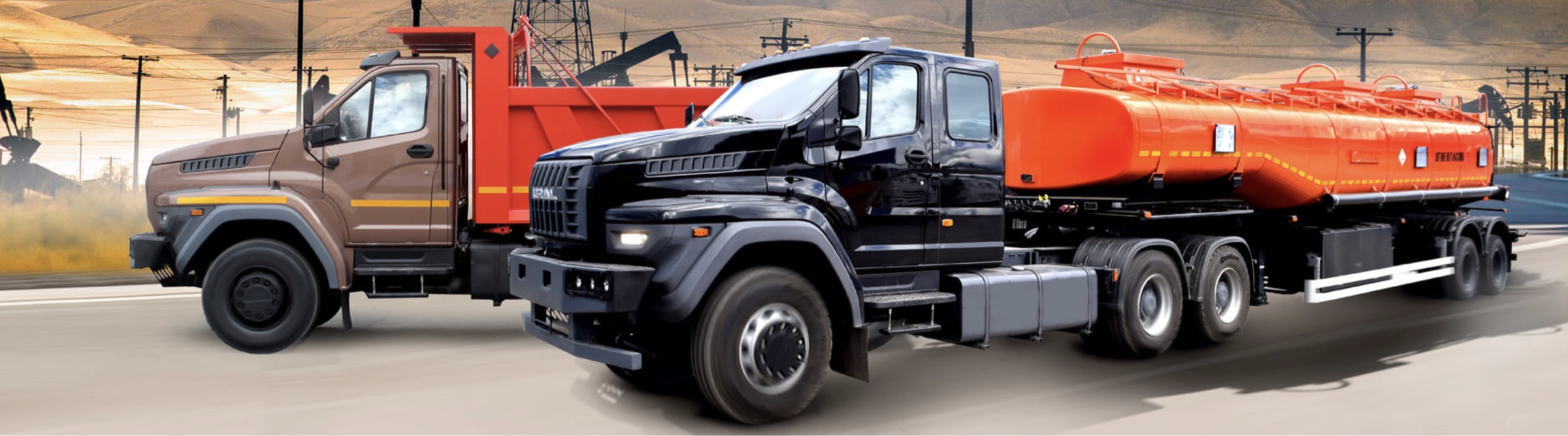
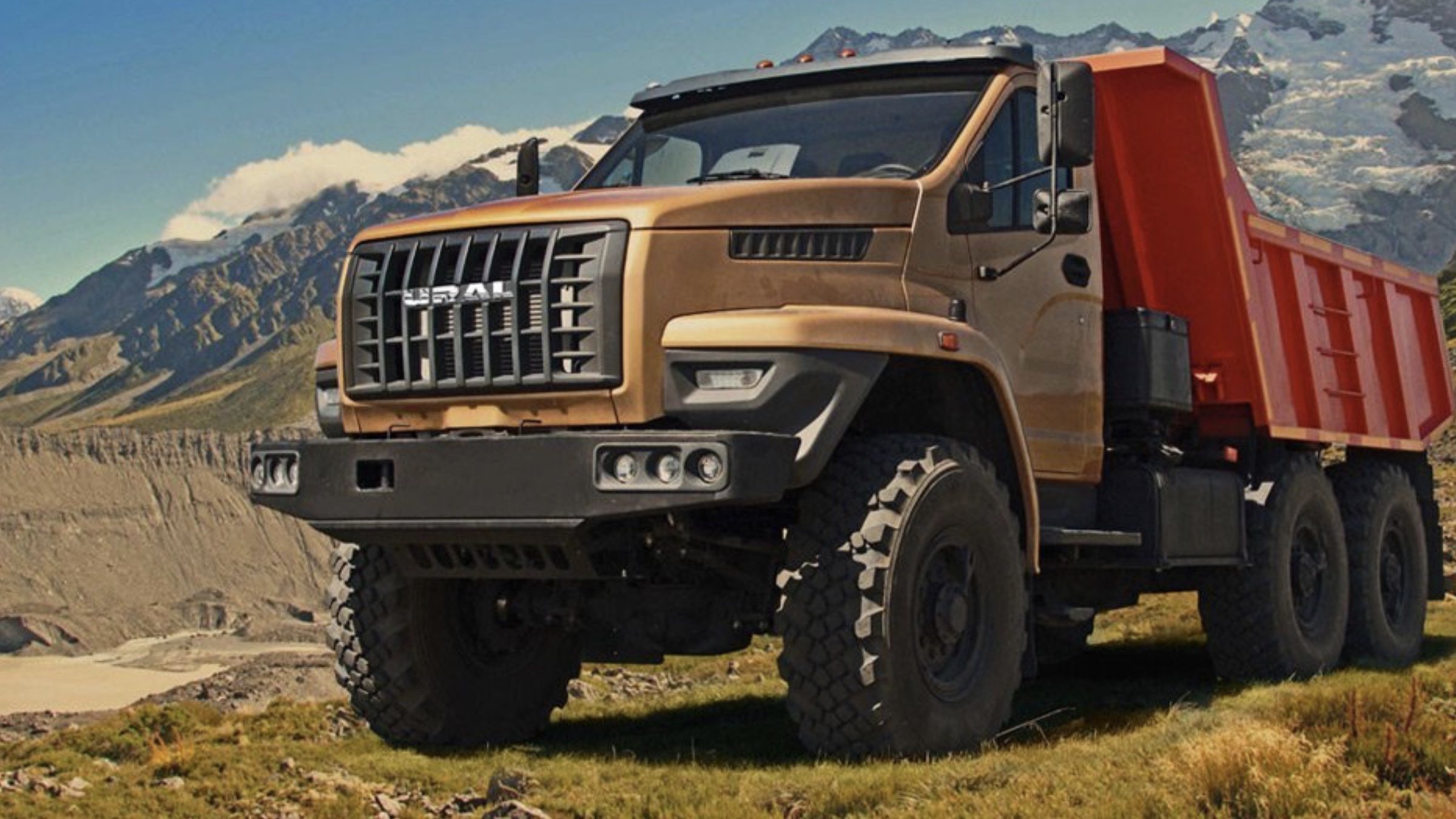
URAL NEXT was presented in 2015 and entered production and sales the same year. A modern cab module, revised chassis systems, improved ergonomics and higher operating efficiency moved the traditional bonneted all-terrain concept into a new generation.
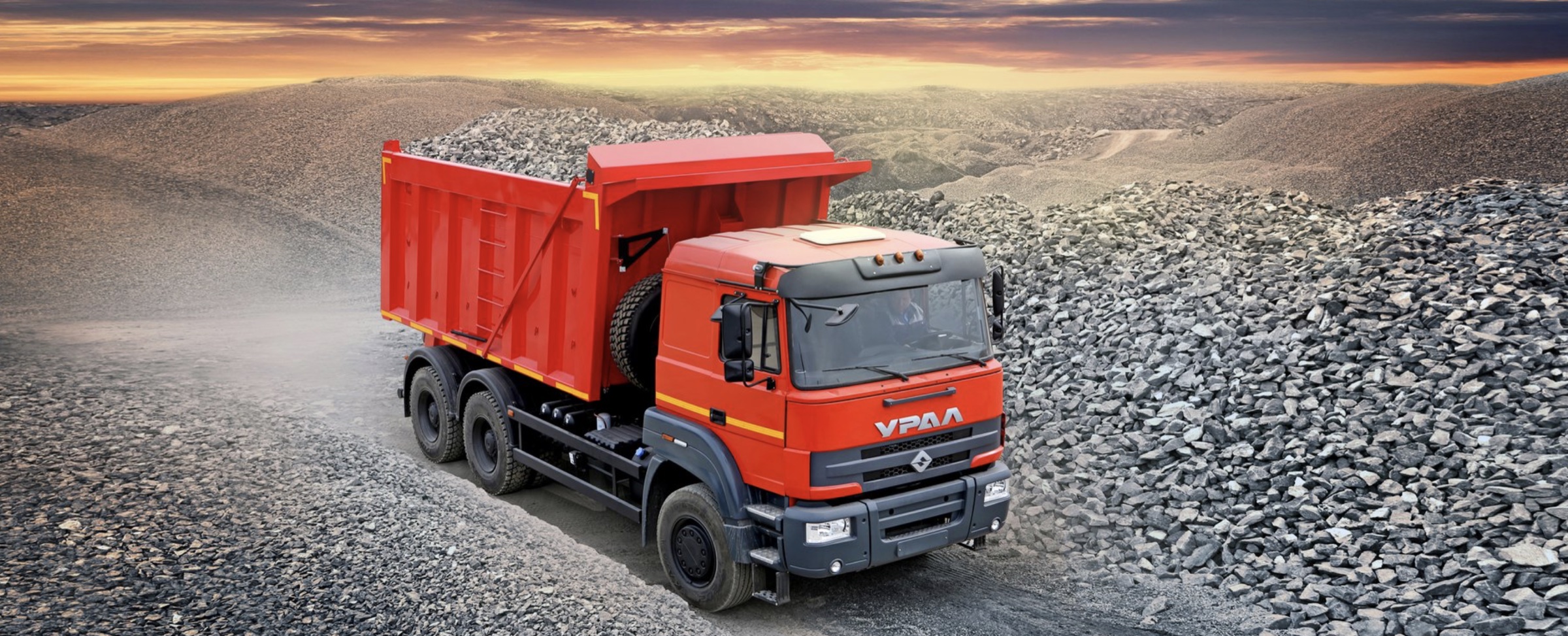
The range broadened again with the 8×8 URAL-9593 in 2017, URAL NEXT 6×4 road vehicles in 2018 and the cab-over URAL C35510 road truck in 2021. These platforms supported dump, tractor, tanker, crane, municipal and other superstructure programmes.
In 2024, the factory presented a prototype electric modular truck platform and stated an intention to begin series production in 2026. December 2024 also brought series assembly of the more compact 4×4 URAL 80, model 43206-67. At COMVEX 2025, URAL 80 received the “Perspective of the Year” award.
On 4 April 2025, the 1.5 millionth truck left the Miass line: a URAL NEXT 4320 6×6 chassis. The milestone connected the current range directly to the first Miass-built truck completed almost 81 years earlier.
WHY THE HISTORY MATTERS
Platform thinking.Built into the DNA.
The recurring theme across eight decades is configuration. Cargo truck, chassis-cab, tanker, workshop, crew carrier, recovery vehicle or specialist installation—the base platform has repeatedly been adapted around a real operating problem.
That is also how URAL Trucks Global approaches a modern enquiry. We examine drive layout, payload, terrain, climate, altitude, body interface, fuel quality, maintenance access and the spare-parts plan before recommending a vehicle.
This independent history was prepared in English from client-supplied archival material and cross-checked against the automobile plant’s published history. Model names and trademarks belong to their respective owners. Historical imagery is presented for editorial context.
Manufacturer’s published chronology ↗BUILD THE NEXT WORKING VEHICLE
A proven name. A configuration for your operation.
Tell us the destination, payload, terrain, body and fleet-support requirement. We will help define the right truck, chassis and parts package.
Discuss your project →